After another exceptionally hot and dry summer, it is becoming increasingly important to think about how we capture and use rainwater in our gardens.
Water is a precious resource and, as our weather becomes less predictable, simply allowing thousands of litres of rainwater to disappear from our roofs and into the drains no longer makes a great deal of sense.
Autumn and winter give us a real opportunity to capture some of that water and keep it for the increasingly dry periods we experience during spring and summer.
But for me, this isn’t simply about installing a bigger water butt.
As a garden designer working throughout Cambridgeshire, Suffolk, Norfolk and across East Anglia, I think there is a much more interesting question to ask:
How can we design gardens that make better use of the water that naturally falls on them?
Think Beyond the Water Butt
A traditional water butt is a good starting point, particularly for smaller gardens, but we can think much bigger than this.
There are now larger rainwater storage systems that can be incorporated discreetly into a garden, collecting water from houses, garages, sheds and garden buildings.
Even a relatively modest roof can collect a surprising amount of water during periods of sustained rainfall.
When I’m designing a garden, practical considerations such as water, drainage, irrigation and soil are part of the thinking from the beginning.
Where does rainwater naturally travel?
Where can it be collected?
Where can it soak into the ground?
And how might it be stored for the months when the garden needs it most?
Thinking about these questions at the design stage can create a garden that works much more naturally with its environment.
Let Water Soak Back Into the Garden
Capturing water isn’t only about storing it in tanks.
We also need to consider how much rainfall we allow to soak naturally back into the ground.
The increasing amount of hard landscaping in our gardens can mean valuable rainwater is quickly directed away rather than being absorbed where it falls.
This is where the choice of materials becomes important.
Gravel and other permeable surfaces can allow rainfall to filter naturally into the soil, while generous planted borders reduce the amount of completely hard surface within a garden.
It doesn’t mean avoiding terraces, paths or other practical spaces. Good garden and landscape design is about finding the right balance between structure, planting and the way the garden actually needs to be used.

Trees, Hedges and Planting All Help
Planting has an important role to play too.
Trees, hedges, shrubs and generous borders don’t simply make a garden more beautiful. They help slow rainfall, improve the soil and allow more water to be absorbed naturally within the garden.
A well-planted garden can also create shade and shelter, helping reduce moisture loss during hot weather.
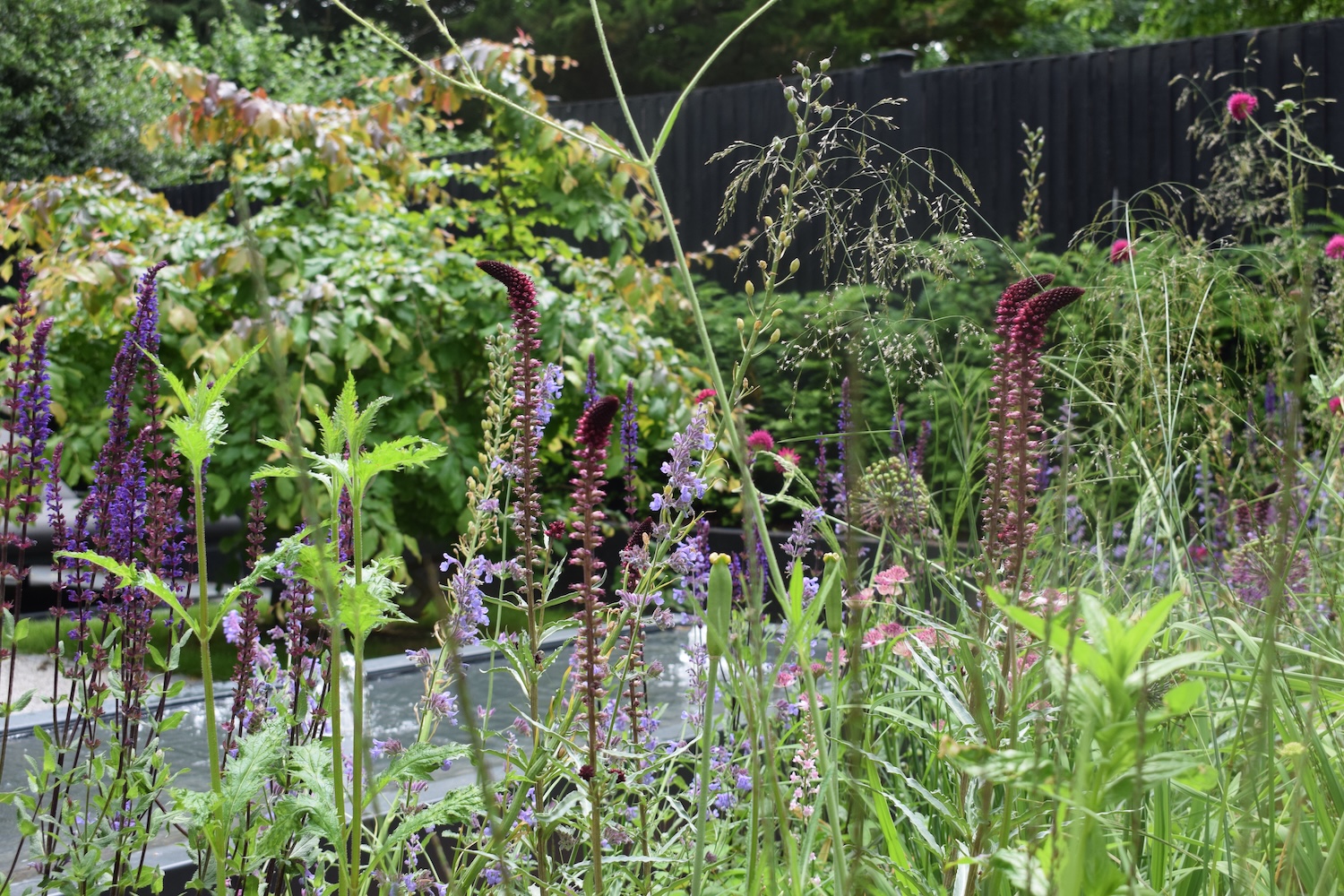
This is one reason I favour gardens where strong architectural structure is balanced by abundant, naturalistic planting.
The planting isn’t an afterthought. It is part of how the garden works.
Could a Rain Garden Become a Feature?
Rain gardens are another interesting possibility.
Rather than immediately directing rainwater into conventional drainage, a carefully designed area can temporarily collect runoff from roofs or hard surfaces and allow it to gradually soak back into the ground.
With thoughtful planting, this doesn’t need to look like a piece of drainage infrastructure.
It can become an attractive part of the garden in its own right.
This is something I find particularly interesting about designing gardens in response to their setting. Practical challenges can often become opportunities to create something beautiful.
Healthy Soil is a Reservoir
One of the simplest ways to help a garden cope with increasingly dry summers is also one of the least glamorous: look after the soil.
Adding organic matter and regularly mulching borders improves the soil’s ability to retain moisture.
Healthy soil acts rather like a reservoir.
It absorbs water when it is available and holds onto more of that moisture for plants to use during the dry periods that follow.
Combined with sensible plant choices and good establishment, improving the soil can make an enormous difference to how resilient a garden becomes.
Designing Gardens for a Changing Climate
None of this means completely changing the way our gardens look.
In many cases, relatively simple decisions about planting, surfaces, soil and water storage can make a significant difference.
And those decisions don’t have to come at the expense of beauty.
Some of the gardens I most enjoy creating combine strong structure with generous planting, trees, hedges and natural materials. Many of the same elements that make a garden feel established, comfortable and connected to its surroundings can also help it respond better to periods of intense rainfall and drought.
After the summers we have experienced recently, I think we have to start viewing rainwater differently.
Rather than something to get rid of as quickly as possible, it is a valuable resource.
The challenge is to capture more of it when it arrives, allow more of it to remain within our gardens and make better use of it when we really need it.
That, increasingly, is simply part of designing a garden well.
October Gardening Calendar
- October is a great month for planting trees, shrubs and many hardy perennials.
- Collect fallen leaves to make leaf mould, one of the best natural soil improvers.
- Plant spring flowering bulbs including daffodils, crocus and alliums.
- Mulch borders to improve the soil and help retain moisture for next year.
- Consider installing or increasing rainwater storage ready for next summer.
Further Inspiration
If you’re thinking about creating a garden that is both beautiful and better equipped for changing weather, you may also find these pages useful:
Explore my Garden Design Services across Cambridgeshire and East Anglia – click here.
Discover my approach to creating gardens that respond naturally to their setting – click here.
Browse completed and ongoing garden design projects – click here.
Planning a new garden? I’d be delighted to discuss your project – click here.
About Tim Jennings Design
Tim Jennings is an RHS Award Winning Garden & Landscape Designer creating timeless outdoor spaces throughout Cambridgeshire, Suffolk, Norfolk and across East Anglia.
His work combines strong architectural structure with beautiful, naturalistic planting to create gardens that are elegant, practical and designed to become richer with every passing season.