
May is that magical time of year here in my Cambridgeshire garden when everything begins to fill out.
The light is fresh, the soil still holds spring’s moisture, and plants finally begin to knit together. It’s the perfect time to think beyond traditional borders and explore a more naturalistic approach to planting.
Layering perennials is one of the simplest and most effective ways to introduce a sense of rhythm, softness and richness to a garden.
Rather than placing plants in rows or isolated clumps, naturalistic planting design encourages us to think in layers. Using groundcover, mid-height structure, and taller accents—all working together like a living tapestry. This mimics the way plants grow in the wild, overlapping and weaving through one another to create something dynamic and enduring.
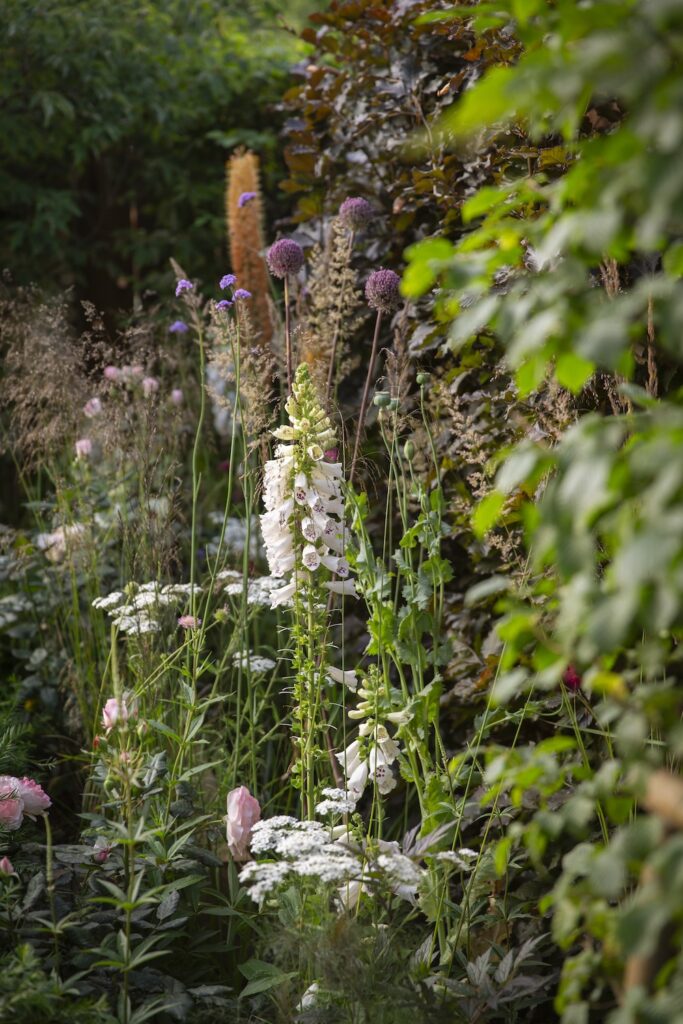
Start with a backbone of long lasting perennials with strong structure plants such as, Veronicastrum, Echinacea, and Amsonia, which offer both height and longevity. Then soften the edges with looser, more ephemeral species such as Geranium, Geum, or Aquilegia. Finally, add in airy grasses like Deschampsia or Sesleria to create lightness and movement.
These grasses are especially well-suited to open, breezy fenland conditions, where they catch the light and sway gently in the wind.
This style of planting isn’t just about aesthetics, it’s about function too. A diverse mix of species supports a wide variety of pollinators and other wildlife. Dense, layered planting suppresses weeds, reduces bare soil, and helps retain moisture, creating a more resilient garden that works with nature, not against it. It’s a way of designing that feels generous, giving space to both plants and wildlife to thrive.
The key is to allow for a little looseness. Let plants self-seed, shift and settle into their own rhythm. Resist the urge to over-control. Over time, this creates a garden that feels truly alive, changing week by week, full of texture, movement, and seasonal character.
At Tim Jennings Design here in Cambridge, this approach forms the foundation of every garden we create. It’s about designing spaces that feel rooted in place, where structure and softness meet, and where biodiversity is built in from the start.
Whether you’re starting fresh or reimagining a tired border, a naturalistic layered planting scheme offers both beauty and resilience and something to enjoy not just in May, but throughout the year.
May Action List
- Plant some layered perennials providing nectar and shelter for insects.
- Top up bird baths regularly and leave a shallow dish of water for bees and butterflies on warm days.
- Add herbs like Thyme, Marjoram, and Oregano, great for pollinators and perfect for summer cooking too.
- Leave some hollow stems or log piles in quiet corners for solitary bees and beetles to nest in.
- Sow annuals such as Nigella and Cornflower.
- Leave a leave a shallow dish of water out for bees and butterflies on warm days.
Working from his studio in the shadow of inspiring Anglesey Abbey, RHS award winning landscape designer Tim Jennings creates stunning outdoor spaces to suit the smallest courtyard to the grandest country home.
Visit www.timjenningsdesign.co.uk or email tim@timjenningsdesign.co.uk for a personal consultation.


